

Casino chip tracking has evolved from manual inventory counts and paper-based reconciliation to automated, continuous, real-time monitoring powered by RFID technology. This guide provides casino operators, procurement managers, and gaming facility directors with a comprehensive understanding of RFID chip tracking technology — from hardware components to software architecture, from deployment strategies to regulatory considerations.
RFID Chip Tracking System Components
RFID-Enabled Casino Chips
The foundation of any RFID tracking system is the chip itself. RFID casino chips contain passive UHF (Ultra-High Frequency) tags embedded within the chip body during manufacturing. The tag consists of a microchip that stores a unique identifier and a thin antenna coil that receives power from the reader’s electromagnetic field Macaumr Gaming Technology.
Chip manufacturers produce RFID tags in several form factors. Inlay-based tags use a thin flexible substrate laminated between chip layers. Ceramic-based tags embed the antenna directly into the chip’s ceramic composite body, offering superior durability for high-denomination chips. Both types operate in the 860 to 960 MHz UHF band, which provides the read range and speed required for casino table applications.
Each chip carries a unique 96-bit Electronic Product Code (EPC) that identifies the chip’s denomination, series, and individual serial number. This code is written during manufacturing and cannot be altered, providing a tamper-proof identity for every chip in circulation.
Table-Side Antennas and Readers
Antennas embedded in gaming tables generate the electromagnetic field that powers passive RFID tags. Table antennas come in several configurations: linear antenna arrays for straight table edges, circular arrays for round tables, and multi-zone arrays for complex betting layouts like roulette and baccarat.
The reader module connects to the antenna array and handles signal processing. Modern readers support dense-reader mode, which enables multiple antennas to operate simultaneously without interference. Reader modules typically connect to the casino network via Ethernet, with some models supporting Wi-Fi for retrofit installations where cabling is impractical.
Central Processing and Software
RFID middleware runs on server infrastructure within the casino’s data center or in a cloud environment. The middleware performs several critical functions: tag data filtering (eliminating duplicate reads), position mapping (associating chip reads with table zones), event generation (creating records of bet placements and payouts), and data routing (sending processed data to casino management systems).
The application layer includes dashboards for floor supervisors, pit managers, and executive staff. These dashboards display real-time table status, chip flow analytics, alert queues, and historical reporting tools. Integration APIs connect the RFID system with player tracking, surveillance, financial reporting, and compliance systems.
How RFID Chip Tracking Works in Practice
Continuous Inventory Monitoring
RFID chip tracking operates continuously, providing an always-current view of chip inventory. Every table, chip bank, and cash cage equipped with RFID readers reports chip counts in near-real time. The system aggregates these counts to produce a property-wide inventory total, broken down by denomination, series, and location.
When a chip bank issues chips to a table, the system records the transfer. When chips move from a table to the cash cage for redemption, the system records that movement as well. This continuous tracking eliminates the need for periodic manual counts and provides immediate visibility into chip distribution across the property.
Bet Tracking and Payout Verification
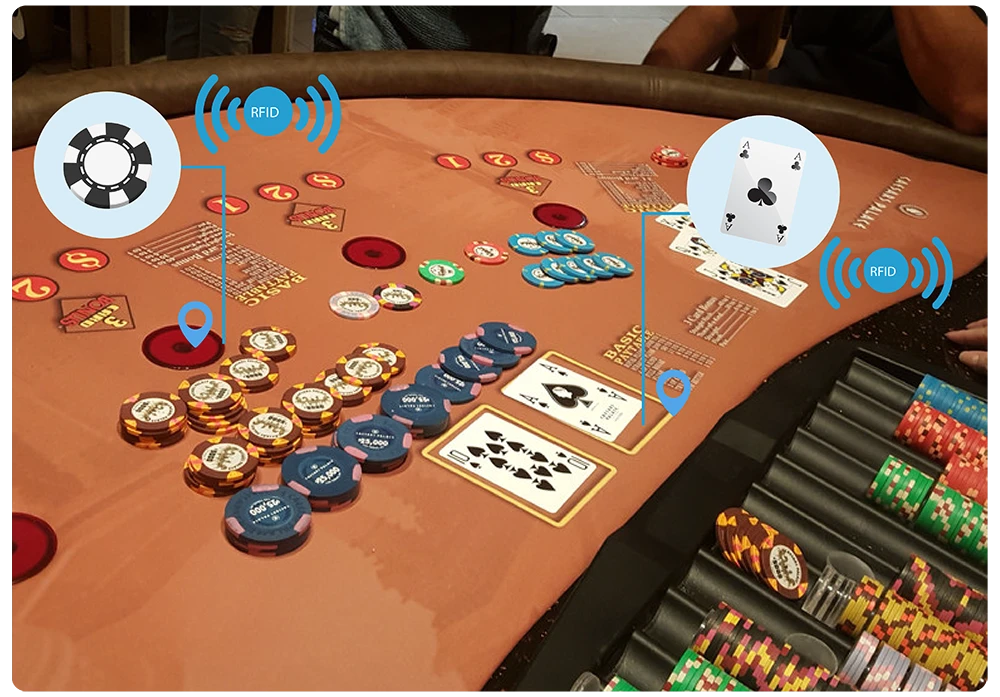
At the table level, RFID antennas read chips placed in betting zones. The system calculates the total bet value by summing the denominations of all chips detected in each zone. This calculation happens automatically and is displayed to the dealer, reducing counting errors and speeding up game play.
Payout verification compares the system-calculated payout against the actual chip movement observed after hand resolution. If a dealer overpays or underpays, the system generates an alert with the exact discrepancy amount and the betting position involved. Floor supervisors can address the error immediately, preventing revenue loss.
Chip Flow Analytics
RFID tracking data reveals chip movement patterns that were previously invisible to operators. Analytics dashboards show chip velocity — how quickly chips move between tables, banks, and cages. Unusually high chip velocity may indicate money laundering or chip dumping activity. Low chip velocity at a specific table may indicate underperformance that warrants investigation.
Geographic chip flow analysis tracks the movement of chips between gaming areas, enabling operators to understand how players migrate across the floor. This data informs table mix optimization, promotional placement, and staffing decisions.
Deployment Strategies
Phased Rollout
Most operators adopt a phased rollout strategy, beginning with high-value areas and expanding gradually. A typical sequence starts with VIP baccarat rooms, extends to high-limit blackjack and roulette, and eventually covers the entire table game floor. Each phase allows the operations team to learn and adapt before expanding further.
Phased rollouts also distribute capital expenditure over multiple budget cycles, making the investment more manageable. Operators typically budget 12 to 18 months for a full-property deployment, with each phase lasting 3 to 4 months.
Greenfield Deployment
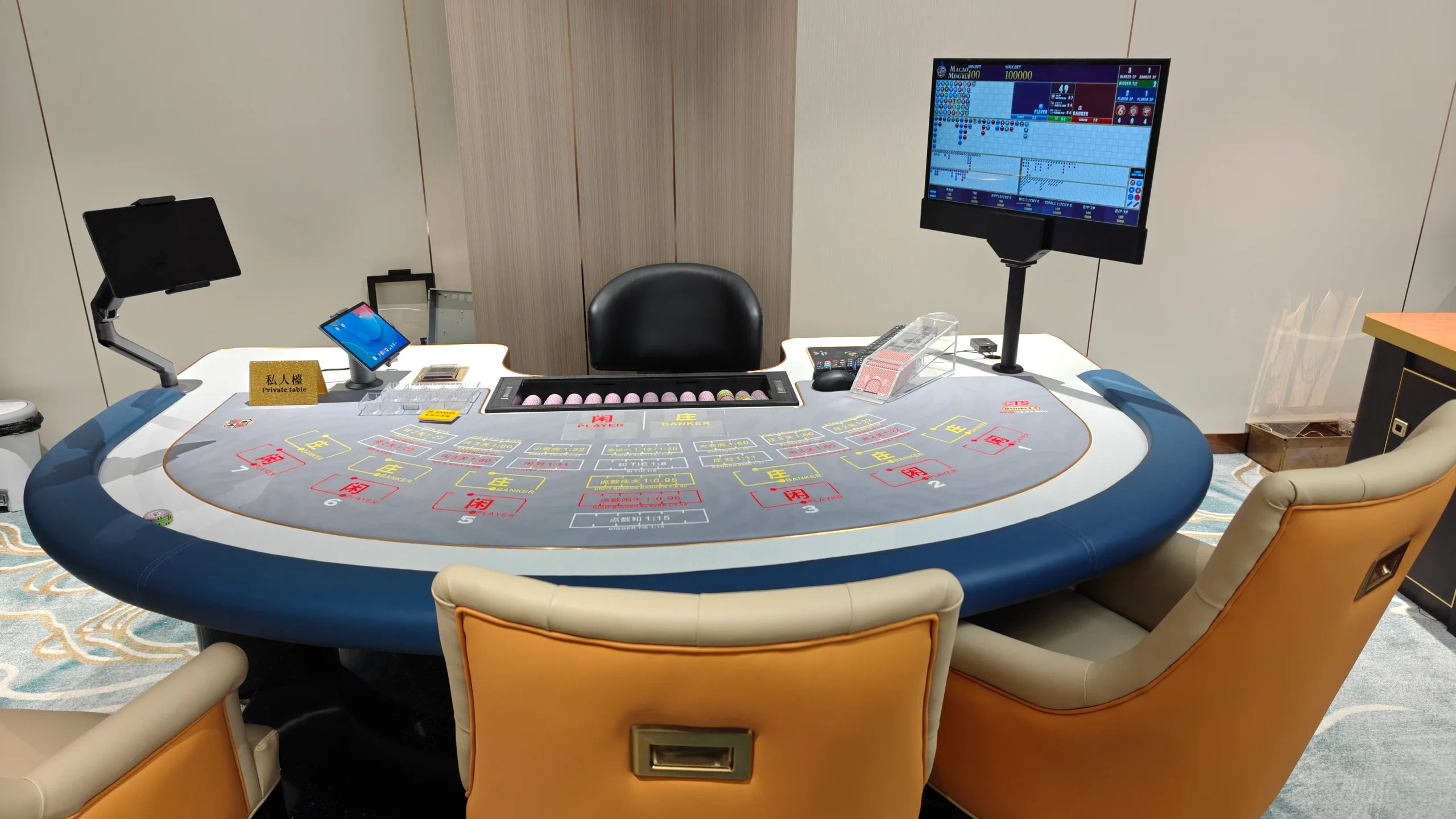
New casino properties have the advantage of specifying RFID capability in the original table procurement. This approach eliminates retrofitting costs and ensures that every table is designed for RFID from the ground up. Greenfield deployments also allow for optimized network infrastructure and server room design, reducing installation complexity.
Several new casino developments in Asia and the Middle East have been specified with full RFID capability from inception. These properties report faster time-to-value and lower total cost of ownership compared to properties that retrofit RFID after opening.
Cost Analysis and Budget Planning
Capital Expenditure Components
The primary capital costs for RFID chip tracking deployment include RFID-enabled chips, table antenna installation, reader hardware, server infrastructure, and software licenses. Chip costs represent the largest single expense for properties replacing their entire chip inventory. A property holding 300,000 chips at $3 to $5 per RFID chip faces a $900,000 to $1,500,000 chip investment.
Table antenna installation costs range from $3,000 to $7,000 per table for retrofits and $2,000 to $5,000 per table for new construction. Reader hardware adds $1,000 to $3,000 per table. Server infrastructure and software licenses vary widely based on property size and vendor pricing models.
Total Cost of Ownership Analysis
Total cost of ownership extends beyond the initial capital investment. Annual operating costs include software maintenance fees (typically 15 to 20 percent of license cost), hardware support contracts (8 to 12 percent of hardware acquisition), chip replacement for damaged or failed units, and staff training refreshers. A 200-table property can expect annual operating costs of $150,000 to $300,000 after the first year.
When calculating total cost of ownership, operators should also factor in the costs that RFID technology eliminates. Manual chip audit labor, player rating estimation time, dispute investigation hours, and regulatory compliance preparation all represent costs that decline significantly after RFID deployment. Net operating cost impact is often neutral or slightly positive after the first year of operation.
Financing and Procurement Options
Some RFID vendors offer leasing arrangements that spread the capital investment over 3 to 5 years, reducing the upfront financial burden. Equipment-as-a-service models are also emerging, where operators pay a monthly fee per table that includes hardware, software, and maintenance. These models reduce capital expenditure and shift costs to operating expense, which may align better with some operators’ budget structures.
Group purchasing through casino operator associations or multi-property portfolios can reduce per-table costs by 15 to 25 percent through volume discounts. Operators should explore these options before committing to individual vendor contracts.
Operating Expenditure
Ongoing costs include software maintenance, hardware support, chip replacement, and staff training. Annual software maintenance typically runs 15 to 20 percent of the license cost. Hardware support contracts cost 8 to 12 percent of hardware acquisition cost per year. Chip replacement for damaged or failed RFID chips costs $3 to $5 per chip, with typical annual replacement rates of 1 to 2 percent of inventory.
Regulatory and Compliance Considerations
RFID chip tracking systems must comply with gaming regulations in each jurisdiction where they operate. Key compliance requirements include data retention periods (typically 5 to 7 years), data access controls, audit trail integrity, and system certification by approved testing laboratories.
Operators should engage with gaming regulators early in the planning process to understand specific requirements and certification timelines. Some jurisdictions require pre-approval of RFID system designs before installation begins, which can add 3 to 6 months to the project timeline.
Frequently Asked Questions
What frequency band do RFID casino chip tracking systems use?
Most systems operate in the UHF band (860 to 960 MHz), which provides the optimal balance of read range, speed, and anti-collision performance for table gaming applications. Specific frequencies vary by region: 902 to 928 MHz in North America, 865 to 868 MHz in Europe, and 920 to 925 MHz in many Asian markets.
How long do RFID chips maintain their readability?
RFID chips are designed for a minimum operational life of 5 to 7 years under normal casino conditions. The passive tags have no internal battery to degrade, so their operational life is determined by physical durability of the antenna and chip substrate. Manufacturers conduct accelerated aging tests that simulate 10 years of daily use.
Can RFID chip tracking systems read chips inside chip racks and trays?
Yes, specialized RFID readers are available for chip racks, bank drawers, and transport carts. These readers use antenna configurations optimized for reading chips stored in vertical stacks. When a dealer loads a chip tray, the system automatically counts the chips and verifies the starting inventory for the table.
How does the system handle chips from different denominations stacked together?
Anti-collision algorithms enable the reader to interrogate each chip individually, even when chips of different denominations are stacked. Each chip responds with its unique EPC, which includes denomination information. The system identifies and sums each denomination separately before calculating the total value of the stack.
What data backup and disaster recovery provisions are recommended?
Operators should implement redundant data storage with real-time replication to a secondary site. Daily incremental backups and weekly full backups provide recovery capability for data corruption scenarios. The recovery point objective should be 15 minutes or less, and the recovery time objective should not exceed 4 hours for critical gaming data.