

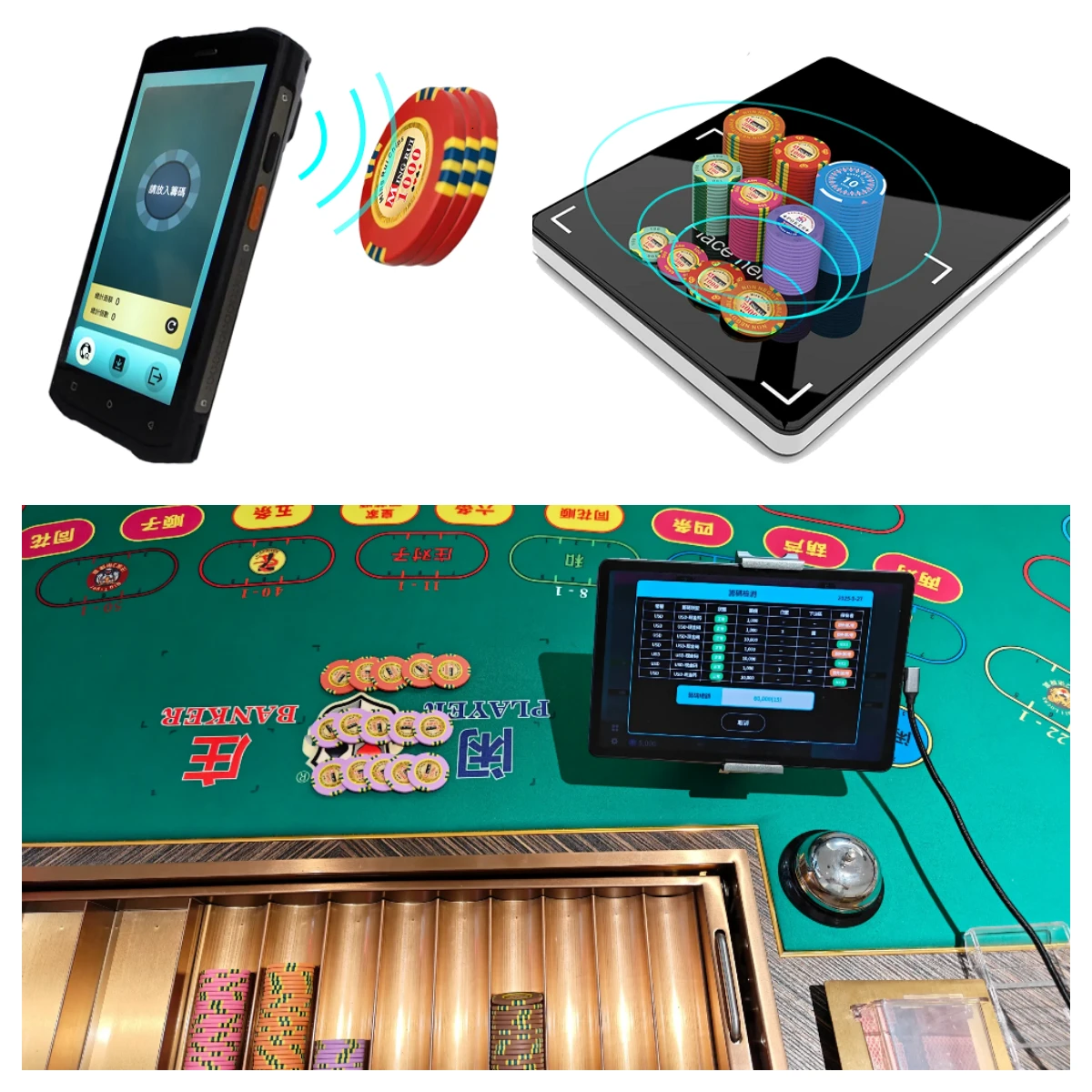
Chip counterfeiting poses a direct threat to casino revenue and operational integrity. Counterfeit chips discovered on the gaming floor undermine player confidence, trigger regulatory investigations, and create financial losses that can reach millions of dollars in a single incident. RFID anti-fraud tables represent the most effective technological countermeasure available, providing multi-layered protection that detects counterfeit chips before they enter play and identifies suspicious patterns that indicate fraud attempts.
The Chip Counterfeiting Threat Landscape
Chip counterfeiting ranges from crude replicas produced by amateur criminals to sophisticated duplicates manufactured with professional-grade equipment. Low-level counterfeiting typically targets lower denomination chips, where security features are less elaborate and visual detection is more difficult. High-level counterfeiting targets premium denominations, using advanced materials and manufacturing techniques to replicate the appearance, weight, and feel of genuine chips.
The financial impact of successful counterfeiting extends beyond the face value of the counterfeit chips. Regulatory scrutiny following a counterfeiting incident can result in fines, mandatory security upgrades, and reputational damage. Player confidence may decline, particularly among high-value customers who expect secure gaming environments. The total cost of a single counterfeiting incident, including remediation expenses, can exceed the face value of the counterfeit chips by a factor of three to five.
RFID Authentication Mechanisms
Unique Chip Identification
Every RFID-enabled chip carries a unique 96-bit Electronic Product Code that cannot be duplicated without access to the chip manufacturer’s secure programming infrastructure. This identifier serves as an unforgeable digital fingerprint. When an RFID table reads a chip, it verifies the identifier against the casino’s chip database. Any chip with an unrecognized identifier is flagged as suspicious immediately.
The authentication process occurs automatically every time a chip is placed on an RFID table. Players and dealers are unaware of the verification, which happens in milliseconds as chips settle on the betting surface. This invisible authentication provides continuous protection without disrupting game flow or creating an adversarial atmosphere at the table.
Encryption and Challenge-Response Protocols
Advanced RFID anti-fraud systems employ encryption-based authentication that goes beyond simple identifier verification. The chip and reader engage in a challenge-response protocol: the reader sends an encrypted challenge, and the chip responds with a cryptographically correct answer. A counterfeit chip without the correct encryption key cannot generate a valid response, even if it carries a copied identifier.
This encryption layer protects against sophisticated counterfeiting attempts where criminals might clone a chip’s identifier. Without the encryption key, a cloned chip fails the challenge-response test and is flagged as counterfeit. The encryption keys are stored in secure hardware modules within the reader infrastructure, making them extremely difficult to extract.
Multi-Layered Fraud Detection
Real-Time Chip Anomaly Detection
RFID anti-fraud tables continuously monitor chip populations on the table surface. The system maintains a running inventory of all chips present, tracking their entry and exit. When a chip appears on the table that was not present during the previous read cycle, and that chip is not accounted for by a known source (player buy-in, chip transfer, or dealer payout), the system generates an anomaly alert.
This detection capability catches counterfeit chips introduced through sleight-of-hand or collusion. A dealer or player who introduces counterfeit chips to the table cannot do so without the system registering the chip’s appearance. If the chip fails authentication, the alert is immediate. If the chip passes authentication but its presence is unexplained, the alert prompts investigation.
Chip Flow Pattern Analysis
RFID systems track chip movement patterns across the entire gaming floor. Anti-fraud analytics identify unusual chip flow patterns that may indicate fraud. Examples include chips that appear on a table without a corresponding buy-in record, chips that move between tables at unusual velocities, and chips that accumulate at specific tables without corresponding increases in table drop.

Pattern analysis operates on historical data as well as real-time data. The system builds baseline models of normal chip flow behavior for each table and gaming area. Deviations from these baselines trigger investigation alerts. This approach catches sophisticated fraud schemes that unfold over days or weeks rather than single sessions.
Dealer Collusion Detection
RFID anti-fraud tables detect dealer collusion patterns that are invisible to traditional surveillance. When a colluding dealer overpays a player, the RFID system records both the correct payout amount and the actual chip movement. The discrepancy is logged with a timestamp, dealer identifier, and table position.
Over time, collusion patterns emerge in the data. A dealer who consistently overpays specific players, or who allows unauthorized chip movements during their shifts, generates a statistical signature. Analytics dashboards highlight these signatures, enabling management to investigate and intervene before losses accumulate.
Counterfeit Chip Response Protocols
When the RFID system detects a suspected counterfeit chip, the response protocol must balance fraud prevention with operational continuity. Recommended protocols include immediate alert generation to the floor supervisor and surveillance, discreet verification of the suspect chip, and table-side chip substitution if the chip is confirmed counterfeit Casino Chip Tracking.
The system should never announce a counterfeit detection publicly. Loud alerts or visible security responses can create panic among players and damage the casino’s reputation. Silent alerts to trained personnel, followed by discrete investigation and resolution, protect both revenue and reputation.
Post-incident analysis is critical. Every counterfeit chip detection should trigger a comprehensive investigation that traces the chip’s origin, identifies how it entered the property, and assesses whether additional counterfeit chips may be in circulation. RFID tracking data provides the investigation trail, showing every table the counterfeit chip visited and every player who handled it.
Cost-Benefit Analysis of Anti-Fraud RFID Tables
The cost of anti-fraud RFID tables must be weighed against the potential losses from counterfeiting incidents. A single successful counterfeiting event involving $100,000 in premium chips can cost the casino $300,000 to $500,000 in direct losses, investigation expenses, regulatory fines, and remediation costs. The investment required to equip a 100-table casino with anti-fraud RFID capability ranges from $500,000 to $1,500,000, depending on the vendor and configuration.
Properties that have experienced counterfeiting incidents report that the RFID investment pays for itself within the first year of operation through prevented losses and improved detection capability. Even properties that have not experienced known counterfeiting benefit from the deterrent effect — potential counterfeiters aware of RFID protection are more likely to target unprotected properties.
Integration with Surveillance Infrastructure
RFID anti-fraud tables generate data that integrates with video surveillance systems to provide comprehensive fraud detection. When the RFID system flags a suspicious event, surveillance operators receive a timestamped alert with the table number and event description. They can immediately retrieve the corresponding video footage and observe the flagged event in context.
Some advanced integrations use AI-powered video analytics that correlate chip movement data with visual observations. The system can identify discrepancies between the video record and the RFID record, such as a chip movement observed on video that the RFID system did not detect, or vice versa. These discrepancies may indicate system malfunctions or sophisticated fraud attempts that require investigation.
Building a Culture of Fraud Awareness
Technology alone cannot prevent fraud — it must be embedded in a broader organizational culture of awareness and vigilance. RFID anti-fraud tables provide the data and alerts, but trained personnel must interpret the alerts and take appropriate action. Casinos that achieve the best fraud prevention results combine RFID technology with regular training programs that teach staff to recognize fraud indicators, understand alert response protocols, and appreciate the financial impact of fraud on the business.
Security teams should conduct regular tabletop exercises that simulate fraud scenarios and test the team’s ability to detect and respond using RFID system alerts. These exercises build muscle memory for alert response and identify gaps in procedures that need to be addressed. Post-exercise reviews should evaluate response times, decision quality, and communication effectiveness.
Fraud trend reporting keeps the organization informed about evolving threats. Security teams should publish monthly or quarterly reports summarizing fraud incidents, RFID system detections, and lessons learned. These reports raise awareness across the organization and ensure that frontline staff understand the real fraud risks they face, not just theoretical scenarios.
Future Developments in Anti-Fraud Technology
The next generation of anti-fraud RFID technology will incorporate behavioral biometrics that analyze how players and dealers interact with chips. The pressure, speed, and trajectory of chip placement create biometric signatures that can distinguish legitimate players from trained fraud operatives. When a chip placement motion matches a known fraud signature, the system generates a high-priority alert.
Blockchain-based chip verification is another emerging technology. Each chip’s RFID identifier could be registered on a distributed ledger, creating an immutable record of the chip’s existence and ownership history. Counterfeit chips would lack a valid ledger entry, making detection instantaneous and indisputable. While blockchain integration is still in the pilot stage, several major casino operators are actively testing this approach.
Frequently Asked Questions
How does RFID technology prevent counterfeiting of high-denomination chips?
High-denomination chips use the same RFID authentication as standard chips but may include additional security features such as enhanced encryption protocols, tamper-evident tag designs, and two-factor authentication combining RFID with optical security features. When a high-denomination chip is placed on an RFID table, the system performs both standard authentication and enhanced verification procedures Macaumr Casino Equipment.
Can counterfeiters clone RFID chips to bypass authentication?
Cloning a passive UHF RFID chip requires extracting the chip’s unique identifier and encryption keys. The encryption-based challenge-response protocols used in modern casino RFID systems make successful cloning extremely difficult and expensive. The cost of developing cloning capability for casino-specific RFID chips far exceeds the potential return for most criminal operations.
What happens when a counterfeit chip is detected during live play?
The system generates a silent alert to the floor supervisor and surveillance team. The dealer is not alerted directly to avoid disrupting the game. Trained personnel verify the chip discreetly, and if counterfeit, substitute it with a genuine chip from the chip bank. The game continues without interruption. A formal investigation follows after the gaming session concludes.
How often should RFID anti-fraud systems be updated to counter evolving threats?
Security updates should be applied on a quarterly basis at minimum. Encryption keys should be rotated annually or immediately following any suspected security breach. Chip database records should be audited monthly to identify any anomalies. Operators should maintain a security relationship with their RFID vendor that includes threat intelligence sharing and proactive firmware updates.
Do RFID anti-fraud tables protect against all types of casino fraud?
RFID anti-fraud tables provide strong protection against chip counterfeiting, chip manipulation, and dealer collusion involving chips. They do not protect against card-based fraud, dice manipulation, or electronic device cheating at non-table games. A comprehensive casino security program should combine RFID technology with surveillance, card recognition systems, and trained security personnel.